What It’s Called
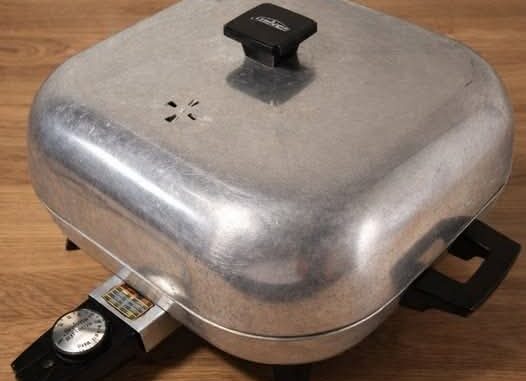
This countertop appliance is commonly known as an electric skillet or electric frypan. Based on the branding and shape shown in the photos, it’s a Sunbeam vintage electric skillet with a high-dome aluminum lid (often marketed in that era as an “automatic” frypan because the thermostat regulates heat for you).
Key Identifying Features (Seen in the Photos)
- High-dome aluminum lid with a small steam vent cutout pattern
- Square/rounded-rectangle cooking body (deep enough for frying and braising)
- Black side handles for carrying
- Detachable thermostat control probe with a temperature dial
- Short legs/feet that lift the skillet off the counter for heat protection
- Sunbeam branding on the lid handle/knob
When It First Appeared
- Electric skillets became especially popular in mid-century kitchens, and this high-dome Sunbeam style is most strongly associated with the 1950s.
- This period emphasized fast, convenient, plug-in cooking for busy households.
Who Made It (Creator/Manufacturer)
This model was produced by Sunbeam, a major American small-appliance manufacturer well known for mid-century electric kitchen products.
In other words, the “creator” of this specific skillet design and product line is Sunbeam (Sunbeam Corporation).
What It Was Made For (Main Purpose)
A vintage Sunbeam electric skillet was designed to be a multi-purpose, countertop cooking pan that could replace or reduce reliance on a stovetop burner. Its goals were consistent heat control and versatility.
Frying: bacon, eggs, pancakes, chicken pieces, cutlets
Sautéing: onions, vegetables, stir-ups of meat and veg
Simmering: sauces, gravy, chili, stew
Braising (lid on): pot roast-style dishes, tenderizing tougher cuts
Keeping food warm: buffet-style serving, family gatherings
High-dome advantage: room for taller foods (larger roasts, stacked items, or foods that need headspace while covered)
How It Works (Simple Explanation)
You plug the skillet into the wall, then connect the thermostat probe to the skillet’s socket.
You set a target temperature using the dial (for example, low for warming/simmering, higher for frying).
An internal heating element warms the pan evenly from the base.
The thermostat cycles power on and off to hold a steadier cooking temperature.
The dome lid traps heat and moisture for faster cooking and better tenderness, while the vent helps release excess steam.
Why It Mattered in Its Time
Convenience: portable cooking without tying up the stovetop
Control: more consistent frying temperatures than many older stove burners
Versatility: one appliance could handle multiple cooking styles
Mid-century practicality: fit the era’s demand for efficient, “modern” home appliances
Leave a Reply