A Surprising Discovery
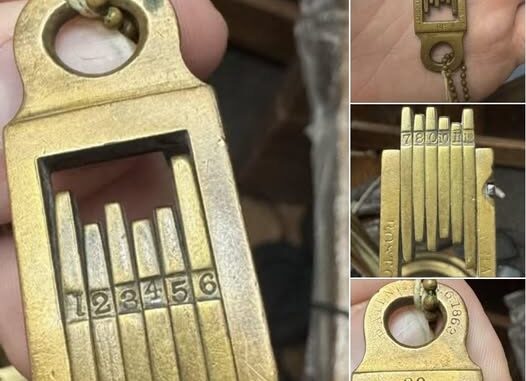
At first glance, I assumed this object was some type of gauge, possibly a steam gauge from the 1800s. Its weight, 12 numbered tabs, and small side pin suggested a measuring device. But when I noticed the words “PATENT 1863”, everything changed.
It wasn’t a gauge at all. It was an 1863 W. Hall brass combination lock, patented in Boston in the middle of the Civil War. Once I realized this, the lock’s design made perfect sense—and became far more fascinating.
What This Lock Is
The combination lock was patented by W. Hall on January 6, 1863 as U.S. Patent #37,290. Crafted from solid brass, it’s a compact lock designed to secure small items like lockboxes, trunks, or travel cases. The loop on top indicates it was meant to attach to an item rather than being built into it.
Unlike modern combination locks, this device doesn’t use a key or rotating dial. Instead, it relies on 12 flat brass tabs, each numbered and able to slide or pivot slightly. Inside, each tab has a notch. When all tabs are aligned correctly, the notches line up, allowing the internal bolt to move.
Leave a Reply