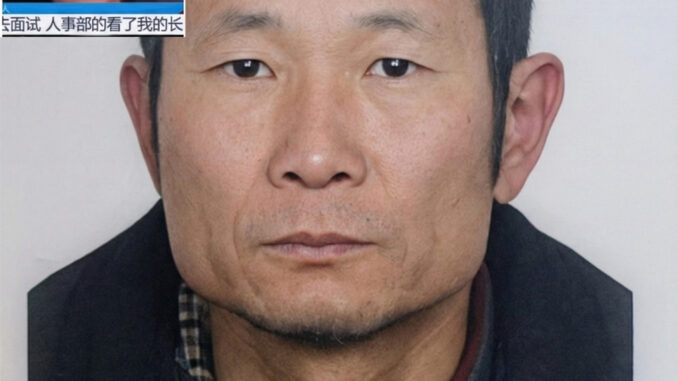
He traveled more than 900 kilometers looking for work.
Not a career.
Not comfort.
Just a job.
Mr. Zhang came from rural Henan to the factory towns of eastern China, walking from one recruitment office to another. He wasn’t picky. Any shift. Any pay. Anything that would let him send money home.
For a week, he filled out forms and waited in plastic chairs under bright lights. Ten factories. More than ten rejections.
Not because he lacked skills.
Not because he failed a test.
Because someone said his face was “too square.”
It was said casually, as if it were nothing.
He had heard comments like that his whole life. At school. On worksites. In shared dorm rooms. He learned to ignore them. But he never imagined his face would decide whether he could eat.
By the seventh day, his money was gone. When reporters found him, he hadn’t eaten in hours. He apologized to them for “wasting time” — while holding food someone had just given him.
That apology said more than any slogan.
His story spread online. Some people blamed factory hiring practices. Some blamed a system where too many workers chase too few jobs. Others stayed quiet — because they saw someone they knew in him.
Back home, his family was still waiting for a call with good news.
Mr. Zhang didn’t ask for sympathy.
He asked for a chance.
And that’s what makes the story hard to forget — because when someone willing to do any job is rejected for his face, the problem isn’t effort.
It’s what a society decides counts as “acceptable.”
Leave a Reply