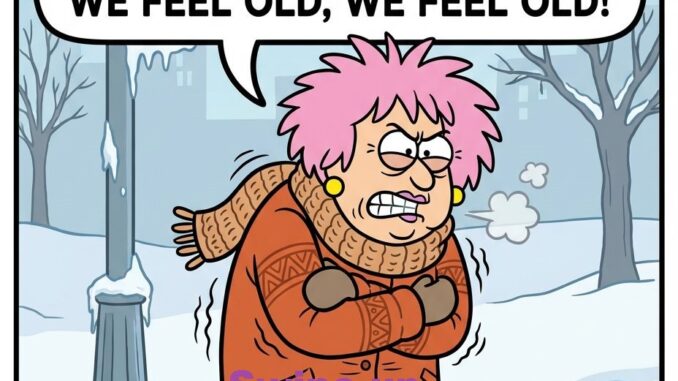
Winter has a way of telling the truth—sometimes more bluntly than we’d like. As temperatures drop, the body seems to speak louder. Knees ache, backs complain, fingers stiffen, and suddenly the cold feels less like a season and more like a reminder of time passing. It’s not just the weather that’s frightful; it’s how deeply we feel it in our joints, our bones, and our sense of self.
Cold weather has long been associated with discomfort, especially for those who have lived long enough to accumulate a few scars, surgeries, or simple wear and tear. Scientists may debate exactly why joints ache more in winter—changes in barometric pressure, reduced circulation, muscle stiffness—but anyone who has felt it doesn’t need a study to be convinced. The cold arrives, and with it comes that familiar feeling: I feel old today.
But perhaps what winter really does is slow us down enough to notice ourselves. In warmer months, we’re distracted by movement, activity, and light. In winter, everything contracts. Trees stand bare, days grow shorter, and we retreat inward. The discomfort we feel isn’t only physical—it’s emotional. The cold strips away illusions of endless energy and forces us to acknowledge vulnerability.
And yet, there’s humor in it too. There’s something universally funny about realizing that the weather now affects our mood, our schedule, and our bodies more than it once did. We laugh because it’s true, and because laughing is easier than resisting what we can’t change. Humor becomes a survival tool, a way of saying: Yes, this hurts—but I’m still here.
Aging, after all, isn’t just about decline. It’s about awareness. Feeling the cold more deeply also means appreciating warmth more intensely. A hot cup of tea, a thick scarf, a quiet room, or the comfort of staying indoors suddenly becomes a luxury. Winter teaches us to value small comforts and to be gentler with ourselves.
There’s also a quiet dignity in accepting these changes. Feeling old doesn’t mean being weak—it means having lived. Every ache has a history. Every stiff joint has carried us through years of work, love, struggle, and joy. The cold may remind us of our limits, but it also reminds us of our endurance.
So when winter comes and the weather outside is truly frightful, perhaps the best response isn’t frustration, but recognition. Recognition that we are human. That time leaves marks. That slowing down is not failure, but a natural rhythm of life.
Yes, the cold makes us feel old. But it also reminds us that we’re still feeling—and that, in itself, is something to be grateful for.
Leave a Reply